

10 Min. Read

Feb 24, 2026
What Are the Jobs in Quantum? 21+ Roles Explained
Discover 21+ quantum careers in software, hardware, cybersecurity, finance, healthcare & consulting. A guide with qualifications, salaries & companies hiring.
SHARE


Why Are Quantum Jobs Exploding?
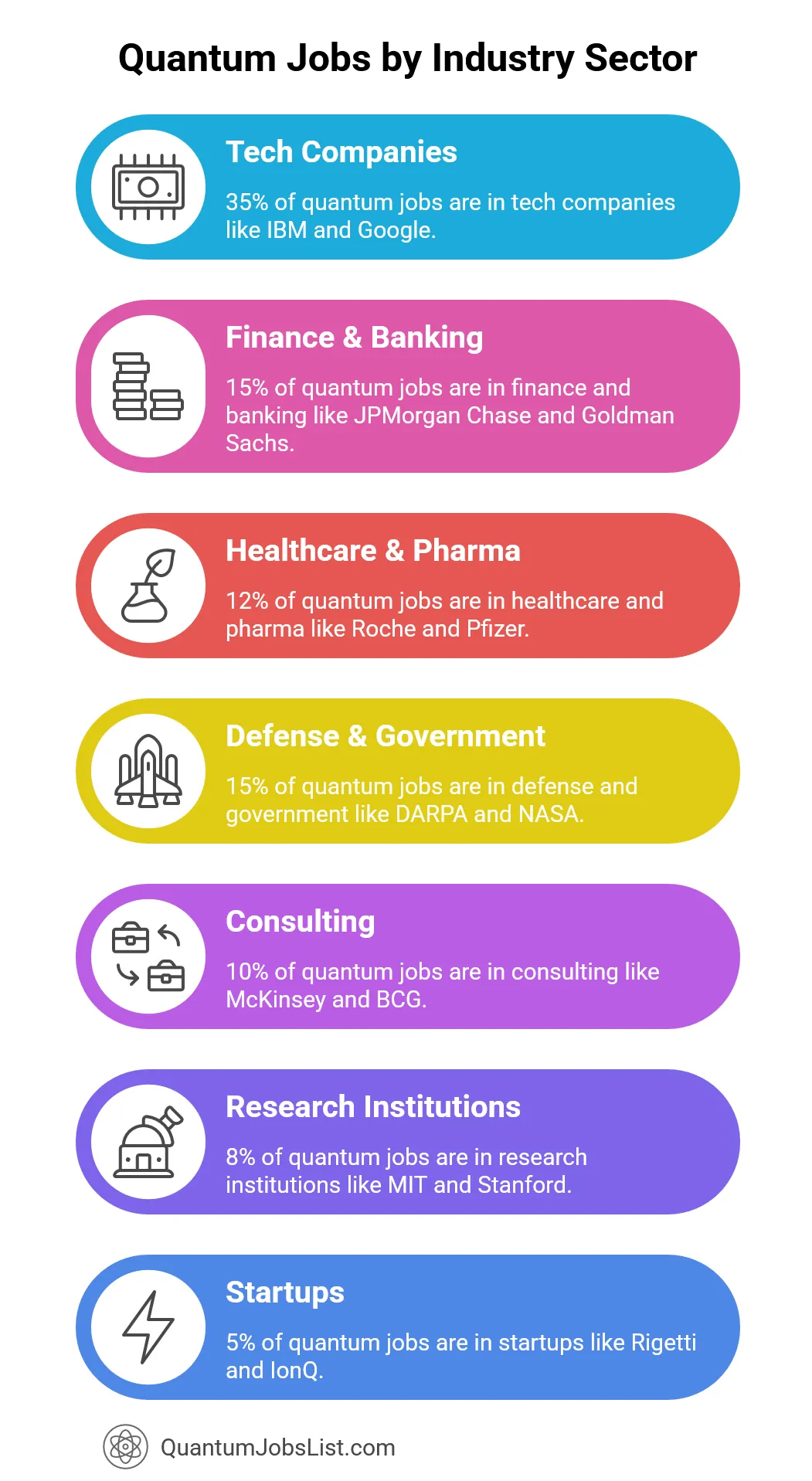
The quantum computing revolution is creating an unprecedented employment boom. Global job listings are predicted to increase by 180% by 2024. Additionally, 250,000 new quantum computing jobs are projected for 2030. Furthermore, the industry is currently experiencing a significant talent deficit. In fact, there may be 3 times more jobs than there are quantum professionals available.
Growth in the quantum field is not limited to traditional research institutions. The field of quantum jobs includes software development, hardware design, business, and even healthcare. Major players like IBM, Google, Microsoft, and Amazon, as well as numerous quantum startups, are vying for talent in many areas.
There will always be an important place for those with PhDs, but for the sector to scale, we will also need technicians [and] programmers. David Awschalom, Director of Chicago Quantum Exchange
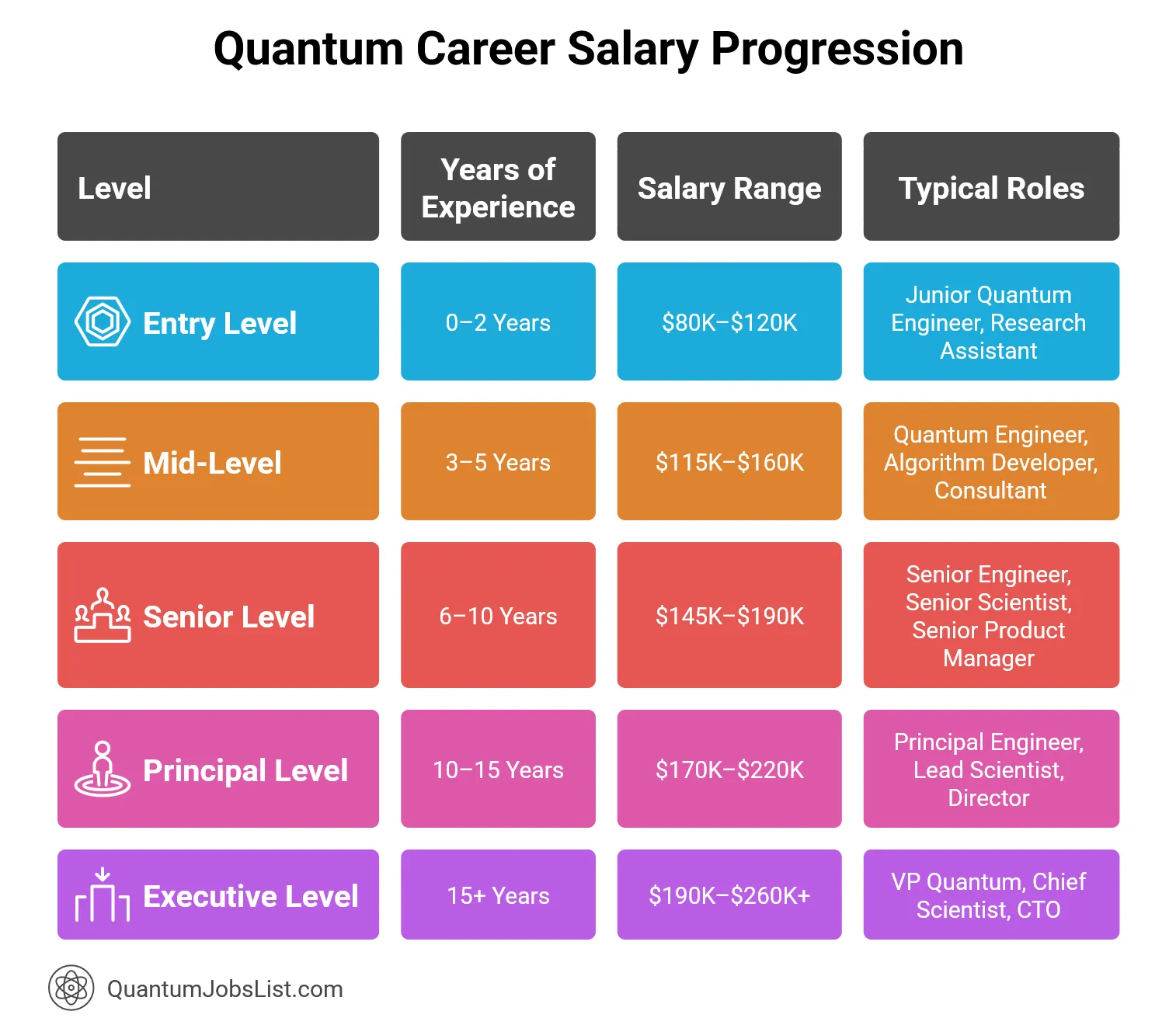
There is no shortage of attractive aspects to working in quantum. For junior quantum engineers, starting salaries are between 68,800 CHF and 103,200 CHF annually. For senior roles, salaries of more than 172,000 are common. In addition to this great pay, workers are involved in the development of new technologies that will increase the capabilities of AI, materials science, finance, cyber security, and medicine.
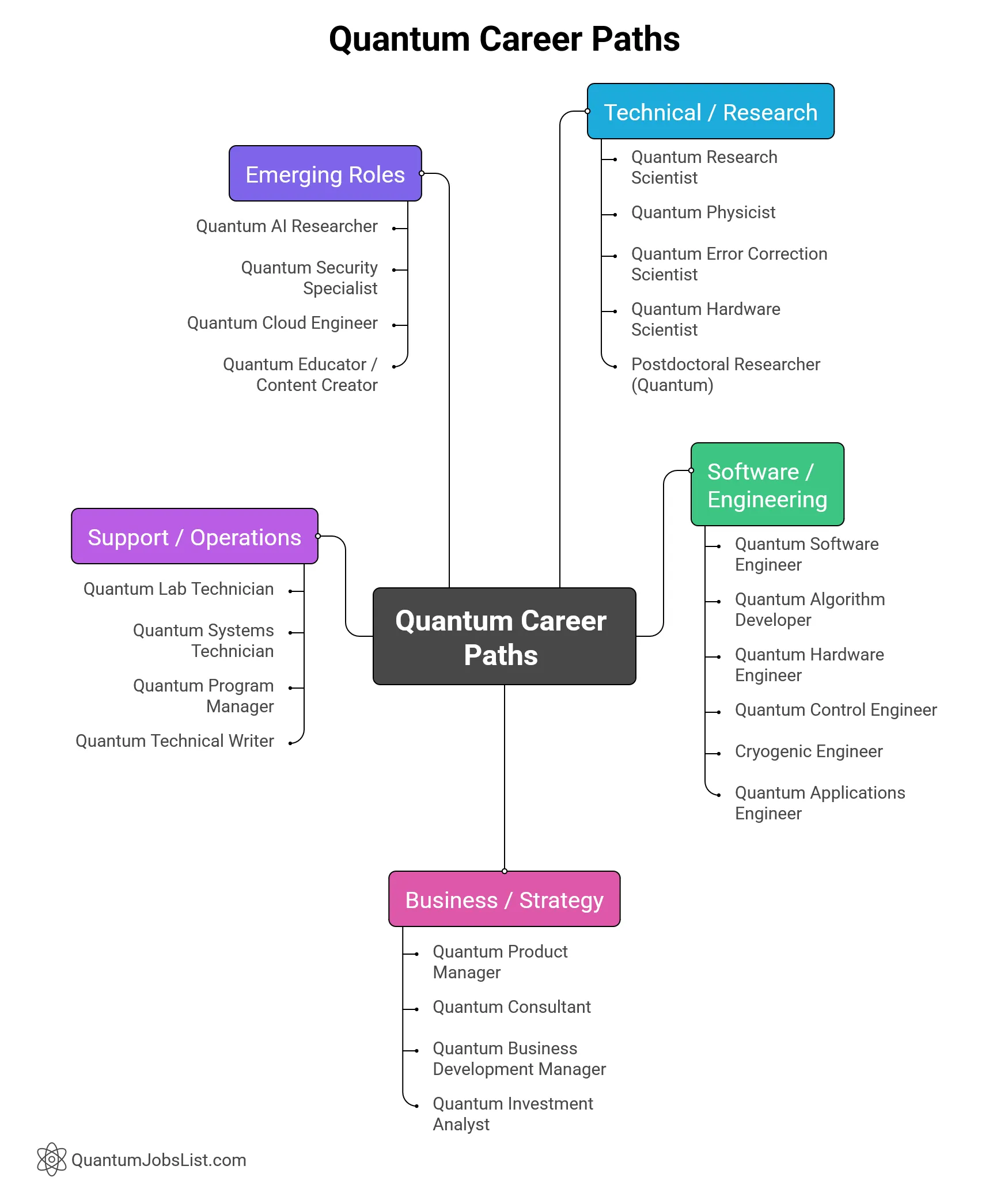
This extensive guide examines all major quantum career pathways. Part 1 explains the most fundamental roles in constructing quantum technologies, technical, and research positions. Part 2 discusses roles beyond the core quantum spectrum, business, ancillary, and new quantum careers. There is a quantum position for everyone, be it a physics student, software engineer, business person, or someone looking to switch careers.
What Do Quantum Research Scientists Actually Do?
Quantum research scientists conduct fundamental investigations into quantum mechanics, quantum information theory, and quantum computing principles. They publish articles and develop theories about the future of quantum technology and what its limits may be.
Responsibilities:
- Do fundamental research about quantum error correction, quantum information theory, and quantum algorithms
- Develop and implement methods to confirm proposed theories about quantum mechanics and quantum theory.
- Publish papers and speak at international quantum mechanics conferences.
- Work in teams with other scientists, mathematicians, and computer scientists
- Guide research of graduate students and junior scientists about quantum physics
- Write grant proposals to fund government and nonprofit research.
Where Do Quantum Research Scientists Work?
- Universities and Academic Institutions: MIT, Caltech, University of Waterloo, ETH Zurich
- Quantum Startups: Research-focused companies developing novel quantum approaches
- National Laboratories: Los Alamos, Sandia, Oak Ridge and Lawrence Berkeley
- Corporate Research Labs: IBM Research, Microsoft Quantum Lab, Google Quantum AI
What Qualifications Do You Need?
Education: PhD in Physics, Quantum Information Science, or related field (nearly always required)
Essential Skills:
Essential skills include a deep understanding of quantum mechanics and quantum field theory. Strong math skills in linear algebra, group theory and topology are important. Expertise in research methods and experimental design, scientific writing and presentation abilities, and programming for quantum simulations (Python, and MATLAB) are also needed.
What Can You Earn?
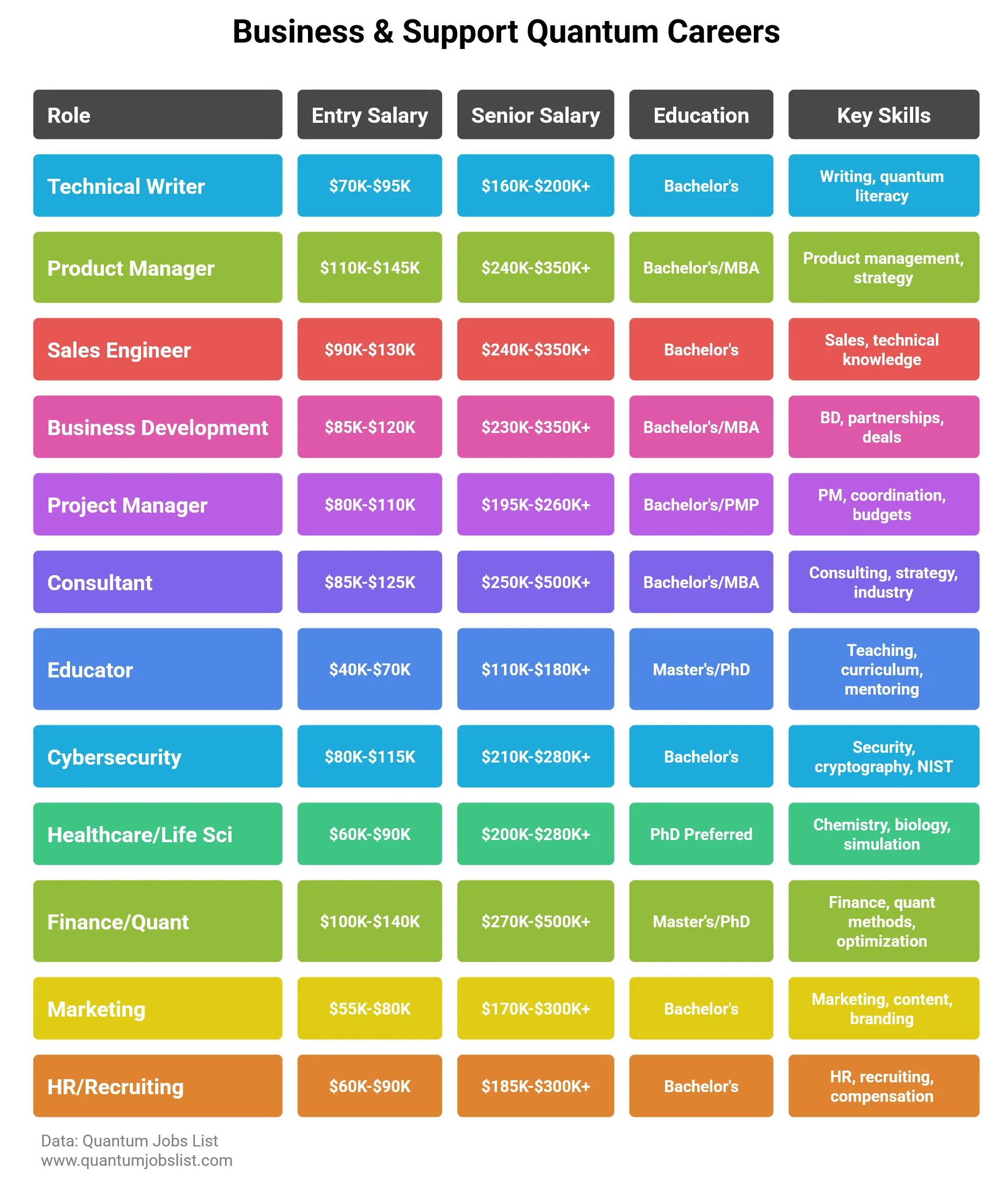
Postdoctoral researchers earn $55,000 - $85,000, while assistant professors or research scientists make $90,000 - $140,000. Senior research scientists earn $140,000 - $220,000+, and principal investigators or lab directors can make $200,000 - $300,000+ annually. You can learn more about Quantum scientists salary here.
How Do Quantum Software Engineers Build Quantum Programs?
Quantum software engineers develop the code, tools, and frameworks that make quantum computers useful. They integrate frameworks that are able to run quantum algorithms and applications. This position combines regular software engineering with the fundamentals of quantum computing.
Responsibilities:
- Draft quantum software libraries using Qiskit, Cirq, Q#, and PennyLane
- Draft tools for programming quantum circuits for developers
- Debugs quantum code and finds sources of quantum errors and quantum performance.
- Designs and develops quantum and classical computing resources for hybrid systems.
- Measure, evaluate, and develop quantum simulators for classical computers.
- Tailor a quantum code for a particular quantum hardware architecture and design.
Where Do Quantum Software Engineers Work?
- Major Tech Companies: Microsoft (Q# development), IBM (Qiskit), Google (Cirq), Amazon (Braket)
- Software Companies: Companies building quantum developer tools and platforms
- Quantum Startups: Rigetti, IonQ, Xanadu, PsiQuantum
- Cloud Platforms: AWS Quantum, Azure Quantum, Google Cloud Quantum
What Qualifications Do You Need?
Education: Bachelor's or Master's in Computer Science, Software Engineering, Physics, or Mathematics
Essential Skills:
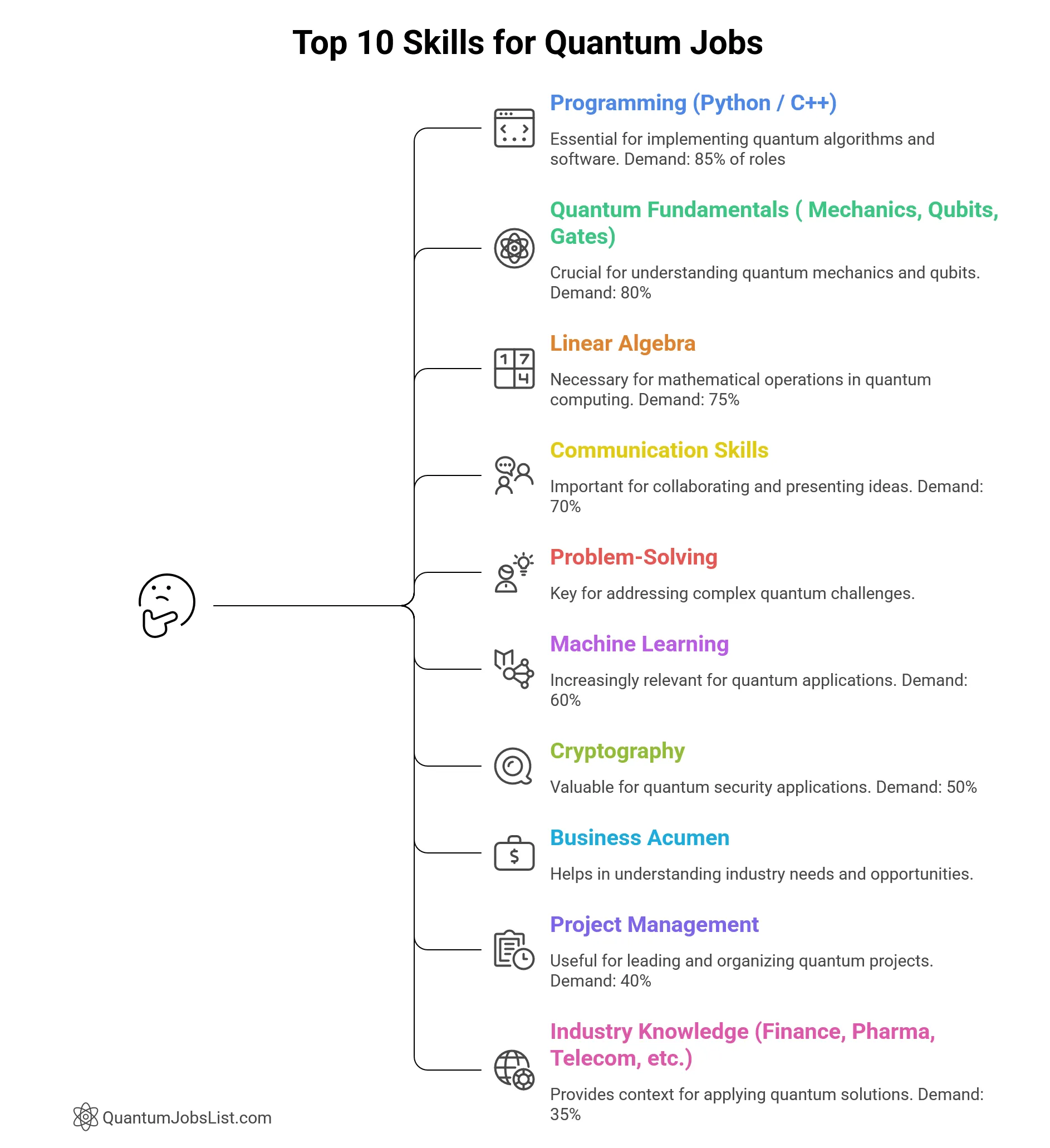
Key skills include strong programming fundamentals in Python, C++ or JavaScript. A solid understanding of quantum computing principles like superposition, entanglement and measurement is important. Experience with quantum programming frameworks such as Qiskit, Cirq, or Q# is required. Knowledge of software engineering best practices, version control (Git), linear algebra, and quantum algorithms is also good to have.
What Can You Earn?
Junior quantum software engineers earn $95,000 - $130,000 a year, while mid-level quantum developers make $130,000 - $175,000. Senior quantum software engineers earn $175,000 - $220,000+. Principal or staff engineers can make $220,000 - $300,000+ a year. You can learn more about Quantum software engineer salary here.
Quantum careers are rapidly diversifying. From hardware engineers to cybersecurity specialists, over 20 distinct roles are now in high demand across tech, finance, and research sectors. Quantum Jobs List
What Does a Quantum Hardware Engineer Build?
Quantum hardware engineers design, build, and test the physical computers that run quantum computations. They work mainly on improving quantum processors, which usually need to operate at very low temperatures. Their work involves solving tough engineering problems, such as managing extreme temperatures, creating precise control systems and working with advanced materials.
Responsibilities:
- Design quantum processor architecture employing superconducting qubits, ion traps, or photonic systems
- Integrate quantum systems with classical control computers & readout electronics
- Troubleshoot hardware issues affecting quantum processor performance and reliability
- Construct quantum hardware systems that incorporate cryogenic systems, control electronics, and measurement devices.
- Evaluate and test qubits to ascertain the coherence time, gate fidelity, and error rate.
Where Do Quantum Hardware Engineers Work?
- Quantum Computing Companies: IBM Quantum, Google Quantum AI, Rigetti Computing, IonQ
- Semiconductor Companies: Intel Quantum Engineering, and Applied Materials.
- Research Institutions: MIT Lincoln Laboratory, QuTech (Netherlands), NIST
- Aerospace and Defense: Lockheed Martin, Northrop Grumman, Raytheon
What Qualifications Do You Need?
Education: Bachelor's or advanced degree in Electrical Engineering, Physics, Materials Science, or related field
Essential Skills:
Key skills include cryogenic engineering and low-temperature physics. RF engineering and microwave circuit design for quantum control are important. Knowledge of vacuum systems and ultra-high vacuum techniques is needed. Experience with laser systems and optics for photonic or ion trap quantum computers is valuable. Materials science for superconducting circuits or semiconductor qubits is also essential.
What Can You Earn?
Junior quantum hardware engineers earn $85,000 - $120,000 annually. Mid-level hardware engineers make $120,000 - $165,000. Senior quantum hardware engineers earn $165,000 - $210,000+, and principal hardware architects can make $210,000 - $280,000+ per year.
The transition was almost fluid, because it really was utilizing the skills I had. Obviously there was a bit of a learning curve since I hadn't taken a physics class since high school, but it's not really required for me to get lost in the minutiae of quantum. Jenna Theis, Director of Operations, EeroQ Quantum
How Do Quantum Algorithm Developers Create Breakthrough Solutions?
One of the roles of a quantum algorithm developer is to develop processes that utilize quantum mechanics to answer questions that classical algorithms cannot answer in a more efficient manner. They collaborate with other stakeholders to assist in the construction of algorithms that utilize quantum computational supremacy.
Responsibilities:
- Build new quantum algorithms for machine learning, optimization, simulation, and cryptography.
- Analyze quantum circuits to enhance the effectiveness of the algorithm through the minimization of gate.
- Perform complexity studies to evaluate algorithm resources and scaling.
- Analyze and publish algorithm development in papers and present it in the quantum computing seminars of algorithms.
- Implement quantum algorithms and evaluate quantum advantages over classical algorithms
- Validate algorithm performance on other quantum devices and simulators.
Where Do Quantum Algorithm Developers Work?
- Tech Giants: Google Quantum AI, IBM Research, Microsoft Quantum
- Research Institutions: Universities and national laboratories with quantum programs
- Financial Services: JPMorgan Chase, Goldman Sachs and Wells Fargo quantum teams
- Quantum Software Companies: Zapata Computing, QC Ware, Pasqal
What Qualifications Do You Need?
Education: Bachelor's degree minimum, Master's or PhD preferred in Computer Science, Mathematics, Physics, or related field
Essential Skills:
Key skills include strong math foundations in linear algebra, group theory, and complexity theory. A deep understanding of quantum algorithms like Shor's, Grover's, VQE and QAOA is important. Programming proficiency in Python and quantum frameworks such as Qiskit or Cirq is needed. Knowledge of quantum error correction and fault-tolerant computing is also valuable.
What Can You Earn?
Entry-level algorithm developers earn $90,000 - $125,000 a year. Mid-level quantum algorithmists make $125,000 - $170,000. Senior algorithm researchers earn $170,000 - $220,000+, and principal scientists can make $220,000 - $280,000+ a year.
What Do Quantum Machine Learning Scientists Discover?
QML scientists develop methods that integrate artificial intelligence with quantum computing. They either develop quantum algorithms that optimize machine learning or improve quantum systems through machine learning.
Responsibilities:
- Create quantum machine learning algorithms to perform classification, clustering, and regression.
- Investigate the quantum advantage in ML applications, such as image processing and the comprehension of natural language.
- Construct variational quantum circuits pertaining to parameterized quantum machine learning models.
- Execute quantum machine learning algorithms on current-generation quantum computers (NISQ devices)
- Research methods of quantum data encoding for the representation of classical data in quantum form
- Work alongside AI teams to pinpoint ML issues where quantum computing could provide a solution.
Where Do Quantum Machine Learning Scientists Work?
- AI Research Labs: Google Quantum AI, IBM Research AI, Microsoft Research
- Academic Institutions: Universities with quantum information & AI programs
- Quantum Startups: Xanadu (PennyLane), Zapata Computing, Quantum Motion
- Tech Companies: NVIDIA quantum computing division, Amazon Braket ML team
What Qualifications Do You Need?
Education: PhD in Quantum Physics, Computer Science, or related field (strongly preferred)
Essential Skills:
Key skills include a strong understanding of machine learning theory and deep learning techniques. Knowledge of quantum computing fundamentals & quantum information processing is important. Experience with quantum machine learning frameworks like PennyLane or TensorFlow Quantum is needed. Programming skills in Python, PyTorch and TensorFlow are essential.
What Can You Earn?
Postdoctoral QML researchers earn $70,000 - $95,000 annually. Quantum ML scientists make $110,000 - $160,000. Senior QML researchers earn $160,000 - $210,000+, and principal scientists or research directors can make $210,000 - $280,000+ per year.
Suggested Read: Quantum ML Jobs: 12 Careers & Skills Guide
How Do Quantum Error Correction Specialists Fix Quantum Mistakes?
Quantum error correction (QEC) experts create strategies to shield quantum data from errors induced by decoherence, noise, and flawed quantum processes. This branch of study is essential for developing truly fault-tolerant quantum computers that can perform large-scale computations reliably.
Responsibilities:
- Develop quantum error correction methods, such as surface, topological, and LDPC code.
- Reduce error correction overhead to achieve fewer required physical qubits.
- Work with the hardware team to create quantum systems designed for error correction.
- Create methods for error mitigation on near-term quantum devices that operate without complete error correction.
- Evaluate quantum noise and qubit performance to determine the effect of error and characterize the noise.
- Execute error correction methods on quantum devices and evaluate the results.
Where Do Quantum Error Correction Specialists Work?
- Quantum Computing Companies: Google (developing surface code implementations), IBM, Amazon
- Quantum Startups: Companies focused on fault-tolerant quantum computing
- Academic Research Groups: MIT, Caltech, University of Sydney quantum error correction labs
- National Laboratories: Los Alamos, Sandia quantum computing programs
What Qualifications Do You Need?
Education: PhD in Physics (Quantum Information Theory) or Computer Science preferred
Essential Skills:
Key skills include a deep understanding of quantum error correction theory and codes. Knowledge of quantum channel theory and quantum noise models is important. Strong math skills in coding theory & algebraic structures are needed. Programming experience for quantum error correction simulations is also valuable.
What Can You Earn?
Junior QEC researchers earn $85,000 - $115,000 annually. Mid-level QEC scientists make $115,000 - $160,000. Senior QEC specialists earn $160,000 - $210,000+, and principal QEC architects can make $210,000 - $270,000+ per year.
Suggested Read: 10 Quantum Error Correction Jobs, Salaries
What Do Quantum Control Engineers Optimize?
Quantum control engineers design control pulse sequences, feedback control, and calibration processes to ensure optimal performance and fidelity of manipulation for various quantum systems.
Responsibilities:
- Develop optimal control pulse design for positive, high-fidelity operations of quantum gates.
- Design systems control for seamless integration with quantum measurement devices and hardware
- Develop and design adaptive quantum control for real-time feedback systems.
- Design and develop procedures for the calibration of quantum systems to ensure optimal performance
- Develop models for the quantum dynamics of a system using control synthesis in conjunction with Hamiltonian theory.
- Develop and optimize pulse configurations to reduce gate errors and decrease the rate of decoherence.
Where Do Quantum Control Engineers Work?
- Quantum Hardware Companies: IonQ (ion trap control), Rigetti (superconducting control)
- Defense Contractors: Quantum sensing and control for military applications
- Research Laboratories: National Institute of Standards & Technology (NIST)
- University Research Groups: MIT, Berkeley, Maryland quantum control labs
What Qualifications Do You Need?
Education: Master's or PhD in Physics, Electrical Engineering, or Control Systems
Essential Skills:
Key skills include knowledge of control theory and optimal control techniques. Understanding quantum dynamics and Hamiltonian engineering is important. Experience with real-time control hardware & FPGA programming is also valuable. RF and microwave engineering for quantum pulse generation is needed. Programming skills in MATLAB & Python for control simulations are essential.
What Can You Earn?
Junior quantum control engineers earn $90,000 - $125,000 a year. Mid-level control engineers make $125,000 - $170,000. Senior quantum control specialists earn $170,000 - $215,000+, and principal control architects can make $215,000 - $275,000+ per year.
What Does a Quantum Applications Specialist Do?
Quantum applications specialists bridge the gap between quantum technology and real world business problems. They identify where quantum computing can deliver practical advantages in specific industries like finance, healthcare, logistics, or materials science.
Responsibilities:
- Identify and evaluate potential use cases of quantum technologies for the target industry and highlight the potential quantum advantage relative to classical capabilities.
- Identify and evaluate industry-specific business challenges and reframe them as quantum-compatible problems.
- Evaluate the performance of quantum algorithms for the specified industry and empirical data.
- Communicate effectively with technical, business, and industry audiences and design industry-specific challenges.
- Collaborate with industry partners to identify and evaluate specific requirements and constraints of the target industry.
Where Do Quantum Applications Specialists Work?
- Consulting Firms: McKinsey Quantum, BCG Quantum, Deloitte Quantum
- Quantum Cloud Platforms: AWS Braket, Azure Quantum customer success teams
- Industry Quantum Teams: Financial services, pharmaceutical companies, logistics firms
- Quantum Software Companies: Companies building industry-specific quantum applications
What Qualifications Do You Need?
Education: Bachelor's or Master's in relevant field (Physics, Computer Science, Mathematics, Engineering)
Essential Skills:
Key skills include understanding quantum computing capabilities and limitations. Domain expertise in industries like finance, healthcare, chemistry, or logistics is important. The ability to evaluate quantum algorithm feasibility for specific problems is needed. Strong communication skills for explaining technical concepts to business audiences are good to have.
What Can You Earn?
Junior applications specialists earn $85,000 - $120,000 a year. Mid-level applications consultants make $120,000 - $165,000. Senior quantum applications leads earn $165,000 - $210,000+, and principal applications architects can make $210,000 - $270,000+ per year.
How Do Quantum Simulation Scientists Model Complex Systems?
Quantum simulation scientists use quantum computers to simulate specific quantum systems that classical systems cannot process, and these include systems such as molecular dynamics, properties of materials, chemical reactions, and condensed matter physics.
Responsibilities:
- Quantum simulation algorithms are designed for molecular systems, materials, and chemical reactions.
- Quantum simulation experiments are benchmarked against experimental results and classical methods.
- Quantum software for specific chemistry and materials domains is created.
- Quantum variational eigen solvers (VQE) are implemented for chemistry domains.
- Quantum models of many-body systems are developed, including both fermionic and bosonic systems.
- With the assistance of chemists and materials scientists, simulation targets are identified.
Where Do Quantum Simulation Scientists Work?
- Pharmaceutical Companies: Roche, Merck, Johnson & Johnson quantum chemistry teams
- Chemical Companies: BASF, Dow, major chemical manufacturers with quantum programs
- Quantum Software Companies: Zapata Computing, QSimulate and ProteinQure
- Research Institutions: Universities and national labs with computational chemistry programs
What Qualifications Do You Need?
Education: PhD in Chemistry, Physics, Materials Science, or Computational Chemistry preferred
Essential Skills:
Key skills include a deep understanding of quantum chemistry and electronic structure theory. Knowledge of classical computational chemistry methods such as DFT & coupled cluster is important. Expertise in quantum algorithms for simulation problems is needed. Programming proficiency in Python and quantum chemistry software is good to have.
What Can You Earn?
Junior quantum chemistry scientists earn $90,000 - $130,000 a year. Mid-level simulation scientists make $130,000 - $180,000. While senior quantum simulation leads earn $180,000 - $230,000+, and principal scientists can make $230,000 - $290,000+ per year.
In the next three to five years, among chemistry, materials, pharmaceuticals, and energy companies, there will be some really big winners that have already captured IP and partnerships in order to get access to those quantum devices. Rafal Janik, Chief Operating Officer, Xanadu

What Do Quantum Technical Writers Create?
Quantum technical writers create documentation, educational materials, and content that makes quantum computing accessible to diverse audiences, from developers using quantum platforms to business leaders evaluating quantum investments.
Responsibilities:
- Quantum programming frameworks and developer tools are documented in an API.
- White papers are authored to describe the benefits and uses of quantum technology.
- Interactive learning materials and videos are produced for the instruction of quantum technology.
- User guides for software, quantum, and cloud services are produced.
- The workings and specifications of quantum hardware are documented.
Where Do Quantum Technical Writers Work?
- Quantum Computing Companies: IBM Quantum documentation, Microsoft Q# docs, Google Cirq
- Consulting Firms: Creating quantum-focused content for clients and thought leadership
- Documentation Firms: Technical writing agencies specializing in quantum and deep tech.
- Educational Platforms: Quantum education companies and online learning platforms
What Qualifications Do You Need?
Education: Bachelor's in Technical Communication, English, Computer Science, Physics, or related STEM field
Essential Skills:
Key skills include strong writing and communication abilities. Understanding quantum computing principles and terminology is important. Experience with documentation tools such as Markdown, Sphinx or MkDocs is needed. The ability to explain complex technical concepts in a clear way is essential.
What Can You Earn?
Junior quantum technical writers earn $70,000 - $95,000 a year. Mid-level technical writers make $95,000 - $125,000. Senior technical writers or documentation leads earn $125,000 - $160,000+, and documentation managers can make $160,000 - $200,000+ per year.
Suggested Read: What Qualifications You Need for Quantum Job?
How Do Quantum Product Managers Guide Development?
Manage product strategy, including product roadmaps and feature prioritization, and facilitate collaboration between engineering roles and clients to develop quantum products that enhance the user experience and achieve business goals.
Responsibilities:
- Develop product roadmaps for the quantum software, hardware, or cloud services.
- Evaluate emerging trends and competitive players in the quantum computing landscape.
- Make build/buy/partner choices for quantum technology elements and capabilities.
- Capture customer needs via interviews, surveys, and UX studies.
- Rank feature expansion requests based on customer requirements, technical, and economic feasibility.
- Steer interdisciplinary groups, including engineers, designers, marketers, and sales.
Where Do Quantum Product Managers Work?
- Quantum Platform Companies: IBM Quantum Experience, AWS Braket, Azure Quantum
- Enterprise Software Companies: Building quantum-enhanced enterprise applications
- Quantum Software Companies: Rigetti, Xanadu, QC Ware product teams
- Tech Giants: Google Quantum AI, Microsoft Quantum product management
What Qualifications Do You Need?
Education: Bachelor's in Business, Engineering, Computer Science, or related field (MBA often preferred)
Essential Skills:
Key skills include product management experience & knowledge of modern methodologies. Understanding quantum computing capabilities and the market landscape is important. Strong data analysis skills and metrics driven decision making are needed. Clear communication and stakeholder management abilities are good to have.
What Can You Earn?
Junior product managers earn $110,000 - $145,000 annually. Product managers make $145,000 - $190,000. Senior product managers earn $190,000 - $240,000+, and directors of product or VPs of product can make $240,000 - $350,000+ per year.

What Does a Quantum Sales Engineer Sell?
Quantum sales engineers combine technical knowledge with sales expertise to help customers understand quantum computing capabilities. They also evaluate use cases, and implement quantum solutions. They conduct technical demonstrations, explain quantum advantages to potential customers. Sales engineers help clients understand how quantum computing can solve specific business problems.
Responsibilities:
- Deliver technical product showcases for quantum computing services and capabilities.
- Assist sales in a technical role during customer interactions.
- Deliver training for the effective adoption of quantum technology.
- Articulate the value of quantum technology to technical and business stakeholders.
- Evaluate clients’ preparedness to adopt quantum technology and determine appropriate quantum applications.
- Develop proof-of-concept projects demonstrating quantum solutions for customer problems.
Where Do Quantum Sales Engineers Work?
- Quantum Hardware Companies: IonQ, Rigetti, Quantinuum sales teams
- Cloud Platforms: AWS Braket, Azure Quantum, Google Cloud Quantum.
- Quantum Software Companies: Zapata Computing, QC Ware, Classiq.
- Consulting Firms: Selling quantum consulting services & implementations
What Qualifications Do You Need?
Education: Bachelor's in Engineering, Computer Science, Physics, or Business
Essential Skills:
Key skills include a technical understanding of quantum computing concepts and applications. Sales experience and customer relationship management are important. Strong presentation and product demonstration abilities are needed. Business acumen & the ability to communicate value clearly are essential.
What Can You Earn?
Junior sales engineers earn $90,000 - $130,000 plus commission. Mid-level sales engineers make $130,000 - $180,000 plus commission. While senior sales engineers earn $180,000 - $240,000+ in total compensation, and principal or strategic sales engineers can make $240,000 - $350,000+ in total comp. You canlean more about quantum jobs salaries here.
How Do Quantum Business Development Managers Grow Markets?
Quantum business development managers focus on growth through partnership and deal-making in relation to quantum computing and its adjacent markets.
Responsibilities:
- Discover innovative business use cases for quantum technologies.
- Act as the company’s representative at all relevant industry fora.
- Succeed in targeted quantum computing industry.
- Foster valuable collaborations with the enterprise, the academic, and the governmental.
- Elaboration of business relations in the targeted industry.
Where Do Quantum Business Development Managers Work?
- Quantum Startups: IonQ, Rigetti, Xanadu business development teams
- Consulting Firms: Building quantum practice areas & client relationships
- Quantum Software Companies: Growing market presence and customer base
- Tech Giants: Google, IBM, Microsoft quantum business development
What Qualifications Do You Need?
Education: Bachelor's in Business, Engineering, or related field (MBA often preferred)
Essential Skills:
Key skills include business development experience and strong deal-making abilities. Understanding the quantum technology landscape and its applications is important. Relationship building and networking skills are essential. Negotiation and contract management skills are also good to have. Strategic thinking and market analysis capabilities are required.
What Can You Earn?
Junior BD associates earn $85,000 - $120,000 plus bonuses. Business development managers make $120,000 - $170,000 plus bonuses; While senior BD managers or directors earn $170,000 - $230,000+ in total compensation. VPs of business development can make $230,000 - $350,000+ in total comp.
Our data shows that employers increasingly value hybrid skills: candidates who understand quantum theory and can also code or manage systems are filling the majority of new quantum roles. Quantum Jobs List
What Do Quantum Project Managers Coordinate?
Quantum project managers oversee quantum technology development projects, ensuring they stay on schedule, within budget, and deliver expected outcomes, while coordinating diverse technical teams and stakeholders.
Responsibilities:
- Assume overall responsibility for planning and executing all aspects of quantum initiatives.
- Bridge the gap between the technologists and the business.
- Sustain the flow of business relations with the quantum service providers.
- Foster the collaboration between the technicians, scientists, and business.
- Maintain the quantum initiatives within Contract, Time, and Scope.
Where Do Quantum Project Managers Work?
- Quantum Computing Companies: Managing product development and research projects
- Research Institutions: Managing quantum research grants & collaborations.
- Consulting Firms: Leading quantum implementation projects for clients
- Enterprise Quantum Teams: Coordinating quantum adoption and POC projects
What Qualifications Do You Need?
Education: Bachelor's degree in relevant field, PMP or similar certification often required
Essential Skills:
Key skills include knowledge of project management methodologies like Agile, Scrum and Waterfall. Understanding quantum technology development processes is important. Strong stakeholder management and communication skills are needed. Risk management and problem-solving abilities are essential.
What Can You Earn?
Junior project managers earn $80,000 - $110,000 a year. Project managers make $110,000 - $150,000; while senior project managers earn $150,000 - $195,000+, and program managers or directors can make $195,000 - $260,000+ per year.
What Does a Quantum Consultant Advise?
Quantum consulting services help organizations understand the benefits of quantum computing, develop quantum strategies, and implement quantum solutions in industries such as finance and pharmaceuticals.
Responsibilities:
- Assessing the quantum readiness of enterprise clients in various sectors
- Assisting in implementing guide pilot projects and proof-of-concept quantum implementations
- Mentoring and guiding leadership to make quantum-related investment and the quantum interstate planning decisions
- Formulating strategies to enhance quantum incorporation and constructing blueprints for the enactment of such strategies
- Recognizing invaluable use cases in which the quantum technology is to offer an upper hand in a competition
- Performing assessments and subsequent vendor novice evaluations regarding quantum technology
Where Do Quantum Consultants Work?
- Management Consulting Firms: McKinsey Quantum, BCG Quantum, Deloitte Quantum practices
- Independent Consulting: Experienced quantum professionals offering advisory services.
- Technology Consulting: Accenture, Capgemini quantum consulting teams
- Specialized Firms: Quantum-focused boutique consulting companies
What Qualifications Do You Need?
Education: Bachelor's or advanced degree in relevant field, MBA often preferred for senior roles
Essential Skills:
Key skills include consulting experience and strong client engagement abilities. A deep understanding of the quantum computing landscape and its applications is important. Industry expertise in sectors like finance, pharma, or logistics is valuable. Strategic thinking and business case development skills are good to have.
What Can You Earn?
Junior consultants or analysts earn $85,000 - $125,000 a year. Consultants or associates make $125,000 - $180,000. White senior consultants or managers earn $180,000 - $250,000+, and partners or directors can make $250,000–$500,000+ a year.
How Do Quantum Educators Shape the Future Workforce?
Quantum educators develop curriculum, teach courses, and create educational content. They train the next generation of quantum professionals through universities, bootcamps, and corporate training programs.
Responsibilities:
- Developing curricula regarding quantum computing for universities, boot camps, and corporate training
- Guiding prospective quantum computing researchers and professionals
- Evaluating achieved learning objectives and improving the educational system
- Delivering instructional quantum courses which include, but are not limited to, quantum mechanics, quantum computing, and a set of use cases.
- Constructing instructional materials such as assigned literature, audiovisual materials, and practical exercises
Where Do Quantum Educators Work?
- Universities: Teaching quantum physics, quantum computing, and quantum information courses
- Bootcamps: Intensive quantum computing training programs
- Online Learning Platforms: Coursera, edX, Udacity quantum course development
- Quantum Companies: IBM Quantum, Microsoft corporate education programs
What Qualifications Do You Need?
Education: Master's or PhD in Physics, Computer Science, or related field (PhD for university positions)
Essential Skills:
Key skills include deep expertise in quantum computing concepts and applications. Teaching experience and curriculum development abilities are important. Strong communication skills for explaining complex ideas clearly are needed. Familiarity with quantum programming tools and platforms is good to have.
What Can You Earn?
Adjunct instructors earn $40,000 - $70,000 a year. Lecturers or assistant professors make $70,000 - $110,000. Associate or full professors earn $110,000 - $180,000+, and corporate training leads can make $100,000 - $160,000+ per year. You can learn more about quantum educator salaries here.
What Do Quantum Cybersecurity Specialists Protect?
Quantum cybersecurity experts deal with protecting systems from cyber threats initiated by rival quantum technologies and incorporating quantum security processes such as quantum key distribution (QKD) and post-quantum cryptography (PQC).
Responsibilities:
- Assess quantum threats to existing global cryptography systems and infrastructures.
- Evaluate and respond to existing, emerging, and anticipated quantum threats.
- Educate security staff on quantum cryptography and post-quantum cryptography.
- Integrate post-quantum cryptography that is resistant to quantum computing.
- Integrate quantum key distribution (QKD) for secure communication to the highest degree.
- Provide quantum security solutions to the private and public sectors.
Where Do Quantum Cybersecurity Specialists Work?
- Government Agencies: NSA, DHS, intelligence agencies protecting national security
- Financial Institutions: Banks implementing quantum-safe cryptography
- Telecommunications: Deploying quantum communication networks
- Cybersecurity Companies: Developing quantum security products and services
What Qualifications Do You Need?
Education: Bachelor's in Cybersecurity, Computer Science, Mathematics, or Physics
Essential Skills:
Key skills include cybersecurity fundamentals and threat analysis. Understanding cryptography and post-quantum cryptographic algorithms is important. Knowledge of quantum computing threats & timelines is needed. Network security and secure communication protocols are essential.
What Can You Earn?
Junior security analysts earn $80,000 - $115,000 a year. Quantum security engineers make $115,000 - $160,000. While senior quantum security specialists earn $160,000 - $210,000+, and security architects or directors can make $210,000 - $280,000+ per year.
What Roles Exist in Quantum Healthcare and Life Sciences?
Quantum healthcare professionals work at the crossroads of the life sciences and quantum tech sectors by using quantum computing for drug discovery, protein folding, medical imaging, and personalized medicine.
Responsibilities:
- Design quantum algorithms for drug discovery and molecular simulations.
- Build and apply quantum sensing and imaging for better diagnostics.
- Collaborate with biotech companies to identify and evaluate quantum prospects in life sciences.
- Apply quantum machine learning to genomics and personalized medicine.
- Show the correlation of quantum outcomes with the experimental and classical simulation outcomes.
- Apply quantum computing to simulate polypeptide folding.
Where Do Quantum Healthcare Professionals Work?
- Pharmaceutical Companies: Roche, Merck, Johnson & Johnson quantum teams
- Biotech Startups: ProteinQure, Menten AI, quantum biology companies
- Healthcare Tech: Companies developing quantum-enhanced medical devices
- Research Hospitals: Cleveland Clinic (IBM Quantum partnership), major research centers
What Qualifications Do You Need?
Education: PhD in Chemistry, Biochemistry, Computational Biology, or related field preferred
Essential Skills:
Key skills include deep knowledge of drug discovery or the life sciences domain. Understanding quantum simulation and quantum chemistry is important. Experience in computational chemistry and molecular modeling is needed. Programming skills in quantum frameworks and classical biology tools are good to have.
What Can You Earn?
Postdoctoral researchers earn $60,000 - $90,000 a year. Quantum computational chemists make $95,000 - $145,000. While senior quantum biology scientists earn $145,000 - $200,000+, and principal scientists or directors can make $200,000 - $280,000+ per year.
How Do Quantum Finance Professionals Transform Markets?
Quantum finance specialists develop quantum algorithms for portfolio optimization, risk analysis, derivative pricing, fraud detection and other financial applications where quantum advantage promises significant business value.
Responsibilities:
- Create quantum algorithms for portfolio optimization and trading.
- Use quantum Monte Carlo methods for modeling financial risk.
- Create quantum machine learning methods for fraud detection and credit scoring.
- Apply quantum algorithms for derivative pricing and market simulation.
- Determine the quantum advantage for particular financial use cases and datasets.
Where Do Quantum Finance Professionals Work?
- Investment Banks: JPMorgan Chase, Goldman Sachs, Barclays quantum teams
- Hedge Funds: Quantitative trading firms exploring quantum advantage.
- Financial Tech: Companies building quantum-enhanced financial software.
- Consulting Firms: Advising financial institutions on quantum adoption
What Qualifications Do You Need?
Education: Master's or PhD in Financial Engineering, Mathematics, Physics, or Computer Science
Essential Skills:
Key skills include expertise in quantitative finance and financial modeling. Understanding quantum algorithms for optimization and simulation is important. Programming proficiency in Python and quantum frameworks is needed. Knowledge of financial markets, derivatives and risk management is good to have. Statistical analysis & machine learning skills are also essential.
What Can You Earn?
Junior quant researchers earn $100,000 - $140,000 a year. Quantum finance analysts make $140,000 - $190,000. Senior quantum quants earn $190,000 - $270,000+, and managing directors or heads can make $270,000 - $500,000+ a year.
Suggested Read: 15 Quantum Banking & Finance Jobs: Skills & Salary
What Do Quantum Marketing and Communications Professionals Create?
Specialists in quantum marketing develop intricate technical market brand strategies, develop relevant content, manage several lines of communication, and establish a presence for quantum computing firms and their respective products.
Responsibilities:
- Develop marketing strategies for quantum products and services
- Develop an understanding of the brand within the quantum computing ecosystem
- Assist in the marketing tools and messaging construction that support sales.
- Develop marketing content - blogs, videos, infographics
- Social media management and online community interactive engagement
- Event planning and execution, including conferences, webinars, and user meetups.
Where Do Quantum Marketing Professionals Work?
- Quantum Computing Companies: IBM Quantum, Rigetti, IonQ marketing teams
- Industry Associations: Quantum Economic Development Consortium (QED-C), others
- Quantum Software Companies: Building brand & driving customer acquisition
- PR and Marketing Agencies: Specializing in deep tech and quantum clients
What Qualifications Do You Need?
Education: Bachelor's in Marketing, Communications, Business, or related field
Essential Skills:
Key skills include marketing experience in technology or deep tech sectors. Understanding the quantum computing landscape is important. Content creation and digital marketing abilities are needed. Event planning and community management skills are valuable. Analytics & metrics-driven marketing experience is also good to have.
What Can You Earn?
Marketing coordinators earn $55,000 - $80,000 annually. Marketing managers make $80,000 - $120,000. Senior marketing managers earn $120,000 - $170,000+, and VPs of marketing or CMOs can make $170,000 - $300,000+ per year.
How Do Quantum Human Resources Professionals Build Teams?
Quantum HR professionals recruit talent, develop organizational culture, design compensation structures, and manage people operations in quantum computing companies facing unique talent challenges.
Responsibilities:
- Cross recruit for quantum business and technical talent
- Oversee the development of staff, including training and career development
- Functionally manage the entire people operational cycle from onboarding to retention strategies.
- Develop availability and accessibility strategies to attract quantum professionals
- Design remuneration and compensation models that are competitive within the quantum ecosystem
- Devise an innovative and collaborative framework around the prevailing organizational culture.
Where Do Quantum HR Professionals Work?
- Quantum Computing Companies: Fast-growing companies building diverse teams
- Recruiting Agencies: Specialized quantum talent agencies like Entangled Positions
- Tech Giants: Google, IBM, and Microsoft quantum division HR
- Universities: Managing quantum research program personnel
What Qualifications Do You Need?
Education: Bachelor's in Human Resources, Business, Psychology, or related field
Essential Skills:
Key skills include HR experience in technology or research-focused organizations. Understanding the quantum talent landscape and required skills is important. Recruiting and talent acquisition expertise is needed. Knowledge of compensation and benefits design is valuable. Employment law and HR compliance experience is also nice to have.
What Can You Earn?
HR coordinators or recruiters earn $60,000 - $90,000 annually. HR managers make $90,000 - $130,000. Senior HR managers or directors earn $130,000 - $185,000+, and VPs of people or CHROs can make $185,000 - $300,000+ a year.
Emerging Quantum Careers to Watch in Next Decade
Emerging quantum careers are opening exciting opportunities as the field rapidly grows. Positions in quantum software, hardware engineering and quantum machine learning are seeing high demand. Careers in quantum cryptography, quantum networking, and quantum finance are also gaining momentum. These positions offer the chance to work on cutting-edge technology that could reshape computing, security, and industry applications. However, there are few more positions getting traction.
High-Potential Career Paths
Quantum Ethics and Policy Specialists
Professionals developing ethical frameworks, regulatory policies, and governance structures for quantum technology deployment. Work with governments, international organizations, and industry groups.
Estimated Compensation: $80,000 - $180,000+ a year, depending on seniority and sector
Quantum Data Scientists
Specialists analyzing quantum computing performance data, benchmarking quantum systems, and extracting insights from quantum experiments.
Estimated Compensation: $100,000 - $175,000+ a year.
Quantum Supply Chain Managers
Specialists coordinating complex supply chains for quantum hardware components, cryogenic systems, and specialized materials required for quantum computers.
Estimated Compensation: $85,000 - $155,000+ a year.
Quantum Intellectual Property Lawyers
Patent attorneys specializing in quantum computing inventions, helping companies protect quantum innovations and navigate IP landscape.
Estimated Compensation: $150,000 - $350,000+ a year.
Quantum Cloud Architects
Professionals designing cloud infrastructure optimized for quantum workloads, integrating quantum and classical computing resources.
Estimated Compensation: $130,000 - $220,000+ a year.
Suggested Read: Quantum Computing Jobs and Salaries
Conclusion
There are unique and new opportunities available in the quantum industry across the technical, business, and support sectors in almost every industry. There are quantum career opportunities for researchers advancing quantum science, engineers developing quantum systems, business professionals shifting the quantum adoption paradigm, and even for creative professionals communicating quantum innovation.
Key takeaways for quantum career seekers:
Multiple Entry Points: You do not need to have a PhD in Physics to work in the field of quantum technologies. There are positions available for people in software development, business analysis, marketing, project management, and many other areas.
Exceptional Growth: Over the last 3 years, job advertisements have increased by 180%. An additional 250,000 quantum positions are available as a result of the job market talent shortage. This is a major opportunity for people who have a desire to learn.
Competitive Compensation: The quantum jobs market is very specialized and therefore offers jobs in excess of $150,000, especially for positions for which there is a high demand.
Interdisciplinary Nature: By bringing together a wide range of disciplines, quantum computing can be applied in almost any field such as physics, computer science, engineering, mathematics, business, etc. This means that your individual background is extremely important.
Continuous Learning: The rapid development of the quantum field is highly rewarding for people who are curious. This field works best for people who are willing to have their skills continuously developed, usually by taking courses, acquiring certifications, or through additional work experience.
Suggested Read:
- How to Get Quantum Jobs Without a PhD
- Top 15 Entry Level Quantum Jobs You Can Get No Experience
- Top 15 Programming Languages to learn for Quantum Jobs
- 8 Steps to Prepare for a Quantum Computing Job Interview
Editorial Team
Author: Quantum Jobs List Editorial Team
This resource is curated by the Quantum Jobs List team, a specialized group of technical recruiters and industry analysts dedicated to the quantum computing sector. Every listing and career guide is manually reviewed for accuracy and technical relevance to ensure high-quality opportunities for the global quantum community.
FAQs
What is the easiest quantum job to get into?
Quantum technical writer and quantum sales engineer are the easiest entry points. Technical writers need strong writing skills and basic quantum understanding. Sales engineers need sales experience plus willingness to learn quantum concepts. Both roles pay well ($70,000-$130,000+ starting) and don't require deep quantum expertise.
Do I need a PhD to work in quantum computing?
No, a PhD is not necessary for most jobs in quantum computing. More than half of quantum jobs require a bachelor's or master's degree. A bachelor's is sufficient for jobs in quantum software engineering, technical writing, sales engineering, and project management. PhDs are typically required for research scientist positions.
How much do quantum computing jobs pay?
Quantum jobs pay between $55,000 and $500,000+ annually depending on role and experience. Entry-level positions start at $70,000-$100,000, mid-level roles pay $120,000-$180,000, and senior positions earn $200,000-$350,000+. Tech companies and finance firms typically pay the highest salaries.
Can software developers transition to quantum jobs?
Yes. Software developers move into quantum careers with ease. Most quantum software engineers use the same programming languages (Python, C++, and JavaScript ) that most software developers use. It takes about 3-6 months to learn quantum programming frameworks (like Qiskit or Cirq). Many quantum companies hire traditional software developers and give them quantum training.
Which companies hire the most quantum professionals?
IBM, Google, Microsoft, and Amazon hire the most quantum workers. IBM employs the largest quantum workforce in hardware and software. Startups like IonQ, Rigetti, and Xanadu also actively hire. Financial companies such as JPMorgan, Goldman Sachs, and consulting firms (McKinsey, Deloitte) increasingly need quantum professionals.
How long does it take to get a quantum computing job?
Getting a quantum job takes 6-18 months depending on your background. Software developers can transition in 6-9 months by learning quantum programming. However, Career changers need 12-18 months to build technical foundations. The process includes learning quantum basics, earning certifications, building projects, and networking with quantum companies.



.svg)